Quick Summary
• Regular exercise helps seniors maintain strength, balance, and independence
• The best exercises for seniors include strength, balance, mobility, and aerobic activities
• Exercise should be adapted to ability level, health conditions, and goals
• Consistency matters more than intensity for long-term benefits
• Professional guidance can help ensure exercise is safe and effective
Staying physically active plays an important role in maintaining independence, mobility, and quality of life as we age. While some physical changes are a natural part of ageing, research consistently shows that regular exercise can slow functional decline and support both physical and mental wellbeing. In Australia, however, many older adults do not meet recommended physical activity levels. According to the Australian Institute of Health and Welfare, insufficient physical activity is associated with an increased risk of falls, chronic disease, and reduced mobility in older Australians.
The good news is that exercise does not need to be intense, complicated, or time-consuming to be effective. When movement is chosen thoughtfully and progressed gradually, it can be safe and highly beneficial at any age. This article explores the best types of exercise for seniors, how often to be active, and how physical activity can be adapted to individual needs and abilities.
Why Exercise Is Important as We Age
As we get older, changes in muscle strength, balance, joint mobility, and bone density can make everyday tasks more challenging. Without regular movement, these changes may progress more quickly, affecting confidence and independence.
Exercise plays a key role in helping seniors:
- Maintain muscle strength for daily activities such as standing, lifting, and walking
- Improve balance and coordination, reducing the risk of falls
- Preserve joint mobility and posture
- Support heart and lung health
- Maintain confidence in movement and daily function
Regular physical activity also supports mental well-being. Staying active can improve mood, reduce feelings of isolation, and support cognitive health, particularly when exercise is part of a routine.
What Are the Best Types of Exercise for Seniors?
The most effective exercise programs for seniors include a mix of different movement types. Each type addresses a different aspect of physical function and contributes to overall health.
Strength Training
Strength training is one of the most valuable forms of exercise for seniors. It helps maintain muscle mass, supports bone health, and makes everyday movements easier and safer. Simple strength exercises can improve the ability to rise from a chair, carry groceries, and maintain good posture.
Because muscle strength naturally declines with age, many professionals consider strength training to be the most important exercise as you get older. When performed with appropriate resistance and technique, it can significantly improve function and confidence.
Strength exercises may include bodyweight movements, resistance bands, light dumbbells, or appropriate gym equipment. The key is choosing resistance that feels challenging but manageable, and progressing gradually over time. We deliver this as a supervised strength program for seniors.
Balance Exercises
Balance training is essential for reducing the risk of falls and supporting safe movement. As balance changes with age, practising balance exercises helps improve coordination and stability.
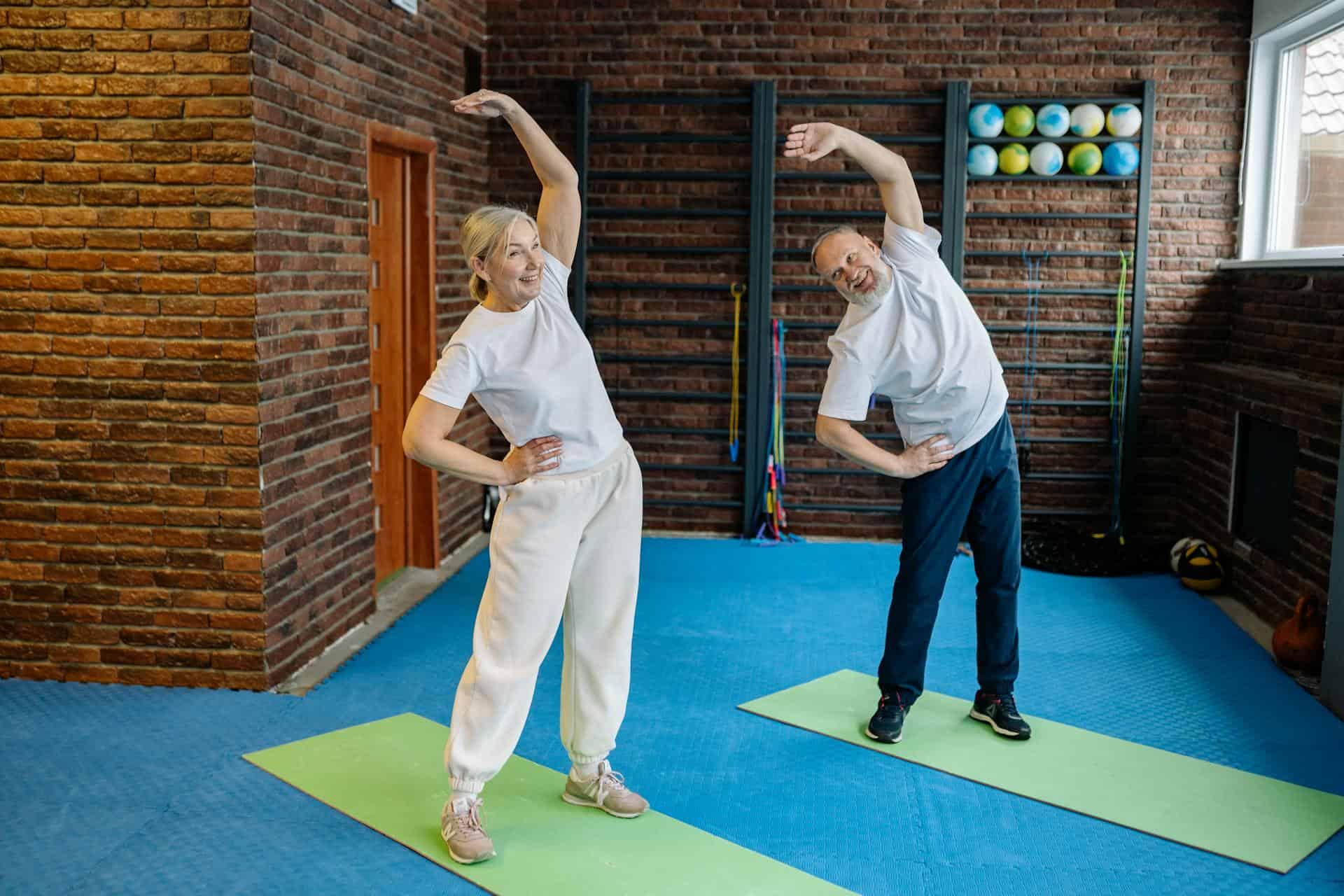
Balance activities may include standing on one leg with support, controlled stepping movements, or exercises that challenge posture and weight transfer. These exercises are particularly helpful for maintaining confidence when walking outdoors, climbing stairs, or navigating uneven surfaces.
Balance training is most effective when practised regularly and combined with strength and mobility work. Our exercise physiology for falls prevention brings these together in a supervised program.
Mobility and Flexibility
Mobility and flexibility exercises help joints move comfortably through their available range. Gentle stretching and controlled movement can reduce stiffness and make everyday activities feel easier.
Mobility work is especially useful for seniors who spend long periods sitting or who feel stiff when starting to move. While stretching alone is rarely enough to improve function, combining mobility exercises with strength training supports long-term movement quality and comfort.
Aerobic Exercise
Aerobic exercise supports cardiovascular health, endurance, and overall energy levels. Walking, cycling, swimming, and low-impact group classes are popular aerobic options for seniors.
Aerobic activity does not need to be high intensity to provide benefits. Moderate-paced movement that slightly elevates the heart rate can improve stamina and support long-term health when performed consistently.
How Often Should Seniors Exercise?
For most seniors, regular activity spread across the week is more beneficial than occasional intense sessions. Being active on most days helps reinforce movement habits and supports physical function.
Many people find it helpful to think in terms of daily activity for older adults, rather than focusing only on formal exercise sessions. This might include walking, light strength exercises, balance activities, or gentle mobility work throughout the day.
Some days may involve more structured exercise, while others may focus on lighter movement and recovery. Listening to the body and allowing adequate rest are important for maintaining a sustainable routine.
Physical Activity Recommendations for Older Adults
Australian and international guidelines generally recommend that older adults aim for a combination of aerobic activity, strength training, and balance exercises each week. These recommendations emphasise that activity should be adapted to individual ability levels, health conditions, and movement confidence.
Importantly, any amount of movement is better than none. Seniors who are new to exercise or returning after a period of inactivity can still experience meaningful benefits from starting slowly and progressing gradually.
The focus should always be on safe, enjoyable movement that can be maintained long term.
Common Concerns About Exercise for Seniors
It is common for seniors to have concerns about starting or continuing exercise, especially if they have experienced pain, injury, or health challenges. Fear of falling, worsening joint pain, or choosing the wrong exercises can create hesitation.
Understanding exercises seniors should avoid, as well as how to modify movements appropriately, can help address these concerns. In many cases, exercises do not need to be avoided completely but can be adjusted to suit individual needs and comfort levels.
As strength, balance, and confidence improve, many seniors find that movement feels easier and more enjoyable over time.
When Exercise Should Be Individualised
While general exercise principles apply to most people, some seniors benefit from a more personalised approach. This includes individuals with chronic pain, joint conditions, balance difficulties, or a history of injury.
In these situations, tailored exercise selection and progression can help ensure safety and effectiveness. Individualisation is also important when selecting exercise equipment for seniors, particularly for those managing knee pain or reduced mobility.
Guidance from a qualified professional can help match exercise type, intensity, and equipment to personal goals and abilities. Our exercise physiology tailored to your goals does exactly that.
Conclusion
Exercise is one of the most effective ways to support healthy ageing. When approached safely and consistently, physical activity helps seniors maintain strength, balance, mobility, and independence throughout later life.
The most beneficial exercise programs include a combination of strength, balance, mobility, and aerobic activity, all adapted to individual needs rather than age alone. By focusing on regular movement and gradual progression, seniors can build confidence and enjoy the physical and mental benefits of staying active.
With appropriate guidance and support, exercise can remain a positive, sustainable part of everyday life at any age. That guidance is what Summit Health Group exercise physiology provides across its Malvern and Blackburn clinics.
FAQ
What types of exercise are most important for seniors?
The most important exercises for seniors include strength training, balance exercises, mobility work, and aerobic activity. Together, these support independence, reduce fall risk, and maintain overall health.
How often should seniors exercise each week?
Most seniors benefit from being active on most days of the week, with strength exercises at least two days per week and balance activities included regularly.
Is it safe for seniors to start exercising if they haven’t been active?
Yes, it’s usually safe to start exercising at any age, but activities should begin at a comfortable level and progress gradually. Professional guidance can help ensure safety.