Quick Summary
• The best exercise equipment for seniors supports strength, balance, and mobility
• Low-impact equipment helps reduce stress on joints
• Equipment choice should match comfort, confidence, and ability
• Seniors with knee pain benefit from controlled, supported movements
• Proper setup and progression are key to safe equipment use
Exercise equipment can be a helpful way for seniors to stay active, build strength, and improve confidence in movement. When chosen appropriately, equipment can provide support, control, and variety, making exercise more comfortable and accessible. However, not all equipment suits every older adult, particularly those managing joint pain or reduced mobility. In Australia, maintaining physical activity as we age is closely linked to functional independence and injury prevention. According to the Australian Institute of Health and Welfare’s insights on ageing and physical function, regular, well-supported exercise plays an important role in maintaining mobility and reducing the risk of falls among older Australians.
This article explores the best exercise equipment for seniors, including low-impact options that are often better tolerated by those with knee pain.
Why Exercise Equipment Can Be Helpful for Seniors
Exercise equipment is not essential for staying active, but it can offer several advantages for seniors. Equipment often provides structure, resistance, and support, making it easier to perform exercises with good control and consistency.
Benefits of using exercise equipment may include:
- Improved strength progression
- Greater movement control
- Added confidence during exercise
- Reduced strain compared to unsupported movements
For some seniors, equipment also makes it easier to exercise at home or in a gym environment.
What to Look for in Exercise Equipment for Seniors
When choosing exercise equipment, comfort and safety should come first. The best equipment allows smooth, low-stress movements with good stability.
Key features to look for include:
- Low-impact movement patterns
- Adjustable resistance
- Stable base or seating
- Ease of use
Equipment should feel supportive rather than intimidating, and movements should be easy to control throughout the exercise.
Resistance Bands: Versatile and Joint-Friendly
Resistance bands are one of the most popular and effective pieces of equipment for seniors. They are lightweight, affordable, and adaptable to a wide range of exercises.
Resistance bands are particularly useful because they:
- Allow gradual resistance progression
- Reduce joint stress
- Can be used seated or standing
- Support both upper and lower body exercises
For seniors with knee pain, bands allow strengthening without deep bending or heavy loading.
Seated Exercise Machines
Seated exercise machines can be helpful for seniors who prefer extra support or who feel less confident standing. Machines often guide movement patterns, reducing balance demands.
Examples include:
- Seated leg press machines
- Chest press or rowing machines
- Seated cycling machines
These options are often well tolerated by seniors with knee discomfort, as they provide controlled movement and back support.
Stationary Bikes and Recumbent Bikes
Stationary and recumbent bikes are excellent low-impact aerobic options for seniors. They support cardiovascular fitness while placing minimal stress on the knees and hips.
Recumbent bikes, in particular, offer:
- Back support
- Reduced knee strain
- Comfortable seating
These bikes are often a good choice for seniors managing knee pain or reduced balance.
Exercise Equipment for Seniors With Bad Knees
For seniors with knee pain, equipment choice becomes especially important. The goal is to strengthen supporting muscles without aggravating symptoms. This is central to our joint-friendly exercise for osteoarthritis programs.
Commonly well-tolerated options include:
- Resistance bands
- Stationary or recumbent bikes
- Water-based exercise equipment
- Seated strength machines
Exercises that involve deep squatting, jumping, or rapid direction changes may need to be avoided or modified.
For a broader overview of safe movement principles, see our guide to the best exercises for seniors, which explains how different exercise types work together.
Using Free Weights Safely
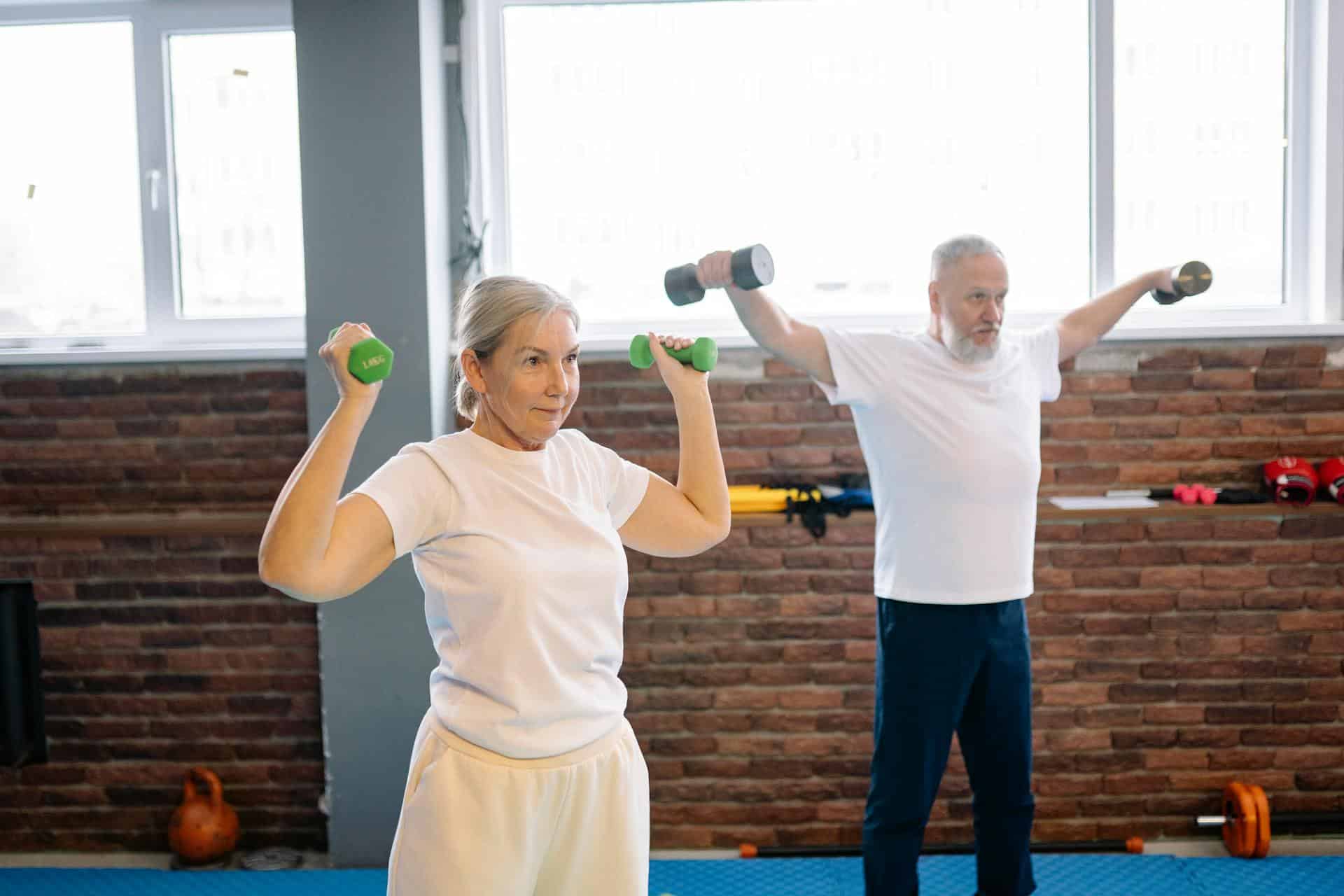
Light dumbbells or kettlebells can be useful for upper-body strength training, but they should be used with care. Proper technique and appropriate load selection are essential.
For seniors, free weights are best used:
- With lighter loads
- At controlled speeds
- With a stable posture or seating
When used appropriately, free weights can improve arm strength, grip strength, and posture.
Do Seniors Need Exercise Equipment?
Exercise equipment is not required to stay active. Many effective exercises use body weight alone. However, equipment can add variety, support progression, and improve comfort for some individuals.
The best choice depends on personal preference, confidence, and physical needs. Some seniors enjoy using equipment, while others prefer simple, equipment-free movement.
When Equipment Choice Should Be Individualised
Some seniors benefit from guidance when selecting and using exercise equipment, particularly those with:
- Knee or joint pain
- Balance difficulties
- Chronic conditions
- Previous injuries
Individualised selection helps ensure equipment supports movement rather than limiting it. Our supervised gym-based programs give older adults access to the right equipment with professional guidance.
Conclusion
The best exercise equipment for seniors is equipment that feels safe, comfortable, and supportive. Low-impact options such as resistance bands, stationary bikes, and seated machines can help build strength, improve mobility, and support confidence in movement.
For seniors with knee pain, choosing equipment that minimises joint stress is especially important. With thoughtful selection and proper use, exercise equipment can play a valuable role in supporting healthy ageing and long-term independence. At Summit Health Group, equipment is part of supervised strength and balance sessions tailored to each person.
FAQ
What is the safest exercise equipment for seniors to use at home?
Equipment like resistance bands, light dumbbells, and seated exercise machines is commonly safe when used correctly.
What exercise equipment is best for seniors with knee pain?
Low-impact options such as stationary bikes, water-based exercise, and seated strength equipment are often better tolerated by people with knee pain.
Do seniors need exercise equipment to stay active?
No, many effective exercises use body weight only, but equipment can add variety and support strength progression when appropriate.