
Post-Surgery & Rehabilitation
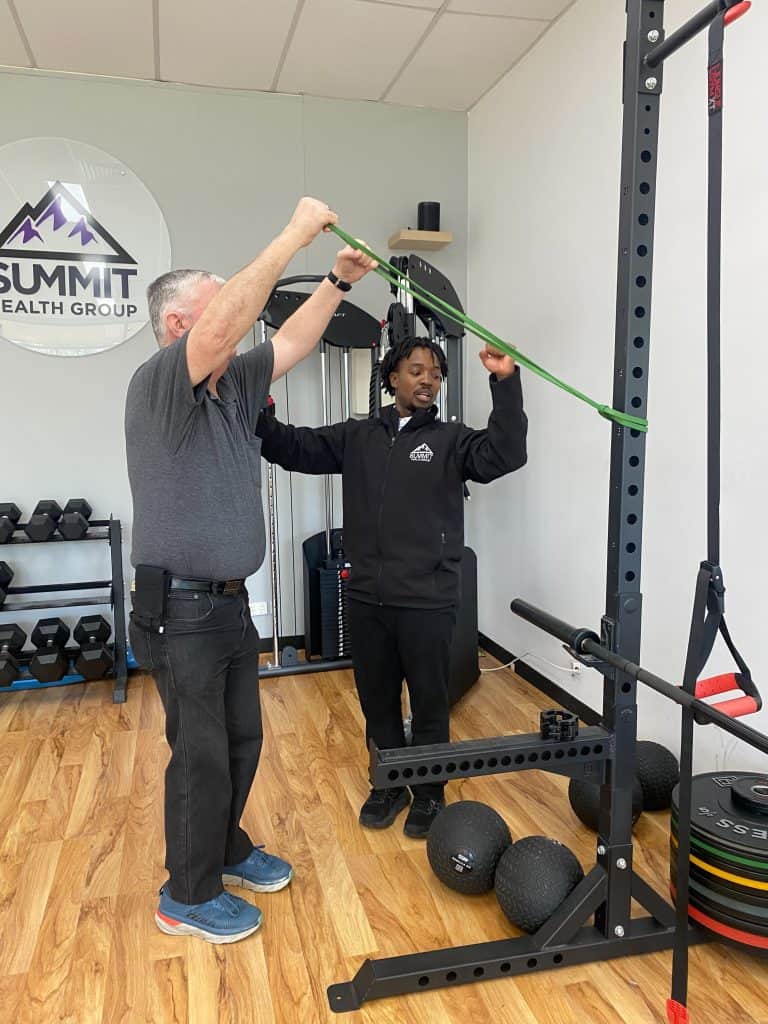
Recovering from surgery is a journey that requires the right support, guidance and expertly structured exercise. At Summit Health Group, our Post-Surgery & Rehabilitation services are designed to help you heal safely, rebuild strength and return to your daily activities with confidence. Whether you’ve had joint replacement surgery, spinal procedures, ligament reconstruction or general orthopaedic surgery, our Exercise Physiologists guide you through every stage of recovery using evidence-based rehabilitation strategies.
We understand that surgery can be both physically and emotionally challenging. Many people feel uncertain about how much they should move, when to begin exercise and how to prevent further injury. Our role is to provide clarity, reassurance and a structured plan that helps you progress at the right pace. With personalised attention and professional guidance, we help you navigate recovery step-by-step, ensuring you regain mobility, reduce pain and restore function safely.
Why Post-Surgical Rehabilitation Is Essential
Surgery is only one part of the recovery journey. The most important progress often happens in the weeks and months after your procedure. Without appropriate rehabilitation, muscles can weaken, joints may stiffen, and movement patterns can become dysfunctional. This not only slows recovery but can lead to long-term limitations.
Targeted post-surgical rehab helps to:
- restore joint range of motion
- rebuild muscle strength and endurance
- reduce swelling and inflammation
- improve balance, posture and coordination
- enhance scar tissue mobility
- reduce pain and stiffness
- prevent re-injury
- return you to daily activities and hobbies
- support long-term function and independence
The sooner rehabilitation begins—within medically appropriate timeframes—the better the outcomes.
Surgeries We Commonly Support
Our clinicians work with a wide range of post-operative conditions, including:
Orthopaedic Surgeries
- total knee replacement (TKR)
- total hip replacement (THR)
- shoulder stabilisation or reconstruction
- rotator cuff repair
- ankle ligament repair
- wrist, hand or elbow surgeries
Spinal Surgeries
- laminectomy
- discectomy
- spinal fusion
- decompression procedures
Ligament & Soft Tissue Repairs
- ACL (anterior cruciate ligament) reconstruction
- meniscus surgery
- tendon repair (Achilles, biceps, patellar, etc.)
Fracture Management (Post-Immobilisation)
- upper or lower limb fractures
- post-casting or post-boot rehabilitation
- trauma-related surgeries
General Surgeries Affecting Movement
- abdominal or pelvic procedures
- thoracic surgeries affecting breathing or posture
If your surgery is not listed, our clinicians can still support you through personalised rehabilitation appropriate to your stage of recovery.
What to Expect From Your Rehabilitation Program
Every post-surgery journey is different. Your program begins with a thorough assessment of your current movement, strength, symptoms and functional goals. We consider your surgeon’s recommendations, post-operative restrictions and the natural healing timelines for your specific procedure.
Your initial assessment may include:
- mobility and range-of-motion testing
- strength and stability screening
- gait and posture analysis
- swelling and scar tissue assessment
- pain evaluation
- functional movement tests (e.g., sit-to-stand)
- review of medical and surgical notes
- goal setting for short, medium and long-term recovery
This information guides the development of your personalised rehabilitation plan.
Our Evidence-Based Rehabilitation Approach
Rehabilitation is progressive—starting with gentle movement and gradually building toward strength, function and return to daily activities. Our Exercise Physiologists guide you through each stage with expertise and reassurance.
Early-Stage Rehabilitation
Focus areas include:
- reducing swelling and inflammation
- gentle mobility restoration
- pain management strategies
- basic muscle activation
- breathing techniques
- safe movement patterns for daily tasks
- improving circulation to support healing
This phase is especially important for preventing stiffness and re-establishing proper movement patterns.
Mid-Stage Rehabilitation
As your body heals, we introduce exercises that improve:
- strength in targeted muscle groups
- joint stability
- balance and coordination
- functional mobility
- walking pattern (gait training)
- core stability and posture
Exercises gradually increase in difficulty to match your healing progress and tolerance.
Late-Stage Rehabilitation
This stage prepares you for returning to meaningful activity, work or sport. It may include:
- advanced strength and conditioning
- movement retraining
- impact training (if appropriate)
- agility and coordination exercises
- endurance building
- functional tasks related to daily living
- workplace or sport-specific preparation
The goal is to help you return to the activities you value with confidence and safety.
Functional Rehabilitation for Everyday Life
Many people worry about returning to normal activities such as walking, climbing stairs, carrying items, driving or exercising. Our programs include functional rehabilitation designed to build your capacity for everyday tasks.
This may include:
- sit-to-stand practice
- step-up progressions
- safe bending and lifting patterns
- walking drills for speed and stability
- home or workplace task simulation
- balance and fall prevention strategies
We focus on practical skills that support independence and confidence.
The Role of Strength Training in Surgical Recovery
Strength training is one of the most important components of rehabilitation. After surgery, muscles often weaken due to disuse, immobilisation or pain. Without strength training, it is difficult to regain full function.
Your program may include:
- targeted resistance exercises
- weight-bearing training
- machine-based or free-weight strength work
- core and hip stability exercises
- muscle endurance training
- progressive overload techniques
We teach correct form and ensure each exercise is performed safely and effectively.
Addressing Pain During Rehabilitation
It is normal to experience some discomfort during the healing process. Our clinicians help you distinguish between expected soreness and symptoms that may require modification or medical review.
We guide you through pain management strategies such as:
- graded exposure exercises
- pacing techniques
- gentle mobility drills
- breathwork and relaxation strategies
- education on safe pain thresholds
Understanding pain helps reduce fear and supports more confident movement.
Common Concerns About Post-Surgery Rehabilitation
“I’m afraid to move too much and damage the surgical area.”
We teach you safe, appropriate movement patterns based on your surgical guidelines.
“I don’t know if I’m doing the exercises correctly.”
Your Exercise Physiologist provides hands-on guidance and clear technique instruction.
“My recovery feels slow—am I doing something wrong?”
Recovery timelines vary greatly. We monitor progress, adjust your plan and reassure you throughout the process.
“I’m nervous about returning to work or sport.”
We build targeted strength and functional capacity to prepare you for a safe return.
“I feel discouraged because I’ve lost confidence.”
Rehabilitation is not just physical—regaining confidence is an important part of the journey, and we support you every step of the way.
Why Choose Summit Health Group for Rehabilitation
Expert Clinicians with Extensive Post-Surgical Experience
Our Exercise Physiologists understand surgical healing timelines and design effective programs that align with your procedure.
Holistic, Patient-Centred Support
We consider your pain, mobility, lifestyle and mental wellbeing—not just your surgical site.
Evidence-Based Programs Tailored to Your Procedure
Your rehab plan is guided by clinical research and best-practice protocols for your specific surgery.
Clear, Supportive Communication
We help you understand what to expect, how to move safely and how to progress without fear.
Flexible Appointment Options
Choose from in-clinic sessions, home-based rehab or telehealth depending on your needs and mobility.
Commitment to Long-Term Recovery
Our goal is not just healing—it’s helping you return to meaningful activity, independence and confidence.
Our post-surgery rehabilitation programs sit within our broader allied health services, supporting safe recovery and return to function following surgery.
Is This Program Right for You?
You may benefit from our Post-Surgery & Rehabilitation service if:
- you’ve recently had orthopaedic or spinal surgery
- you feel weak, stiff or uncertain about moving
- you want a structured, personalised recovery plan
- you’re unsure which exercises are safe
- you want to prevent complications or re-injury
- you want to return to work, sport or daily activity safely
- your surgeon recommended guided rehabilitation
No matter where you are in your recovery timeline, we can help you progress safely.
Start Your Rehabilitation Program Today
A strong recovery begins with the right guidance. With personalised exercise, professional support and a holistic approach to healing, you can regain mobility, reduce pain and return to your normal activities with confidence.
Contact Summit Health Group today to begin your Post-Surgery & Rehabilitation program.
Frequently Asked Questions About Post-Surgery Rehabilitation
Why is rehabilitation important after surgery?
Rehabilitation helps restore movement, strength and function after surgery. A structured program can support safer recovery, reduce stiffness and help you return to daily activities with greater confidence.
When should I start rehabilitation after surgery?
The timing of rehabilitation depends on the type of surgery and your surgeon’s recommendations. In many cases, gentle rehabilitation can begin soon after surgery and is progressed gradually as healing allows.
Is post-surgery rehabilitation tailored to the type of surgery I’ve had?
Yes. Rehabilitation programs are tailored to the specific surgery, the body area involved, and your individual recovery goals. Exercises and progressions are adjusted to suit your stage of healing and functional needs.
Can rehabilitation help reduce pain and stiffness after surgery?
Yes. Appropriate exercise and movement can help reduce pain, improve joint mobility and minimise stiffness following surgery. Rehabilitation also supports better long-term outcomes by improving strength and movement quality.
Do I need a referral to start post-surgery rehabilitation?
In many cases, a referral is not required to begin rehabilitation. However, if you are using certain funding options or following specific surgical guidelines, a referral may be recommended. Our team can advise you based on your situation.