Quick Summary
• Some exercises may increase injury risk for seniors if not adapted
• High-impact or poorly controlled movements can strain joints and balance
• Many exercises don’t need to be avoided entirely and can be modified
• Safer alternatives often provide similar benefits with less risk
• Individual ability and confidence should guide exercise choices
Exercise is an important part of healthy ageing, but not all exercises are suitable for every older adult. Changes in strength, balance, joint health, and reaction time can increase the risk of injury if movements are poorly chosen or performed without appropriate progression. In Australia, falls remain a leading cause of injury among older adults, highlighting the importance of safe exercise selection. According to Australian Institute of Health and Welfare reports on falls and injury in older Australians, activities that challenge balance or load joints excessively can increase injury risk when not adapted appropriately.
Understanding which exercises may be higher risk — and how to modify them — can help seniors stay active with confidence. This article explores exercises seniors should avoid or approach with caution, along with safer alternatives that support long-term movement and independence.
Why Some Exercises Can Be Riskier for Seniors
As we age, natural changes occur in muscle strength, joint flexibility, and balance. These changes don’t mean exercise should be avoided, but they do mean that certain movements require greater care.
Exercises may become riskier when they:
- Place excessive load on joints
- Require rapid changes in direction
- Challenge balance beyond current ability
- Are performed with poor technique or fatigue
The goal is not to eliminate challenge, but to ensure that challenge matches individual capability.
High-Impact Exercises to Approach With Caution
High-impact activities such as jumping, running on hard surfaces, or plyometric movements can place significant stress on joints and bones. For some seniors, particularly those with joint pain or reduced bone density, these activities may increase injury risk.
Safer alternatives include:
- Low-impact walking
- Cycling or a stationary bike
- Water-based exercise
- Controlled step-ups
These options reduce joint stress while still supporting cardiovascular health.
Exercises That Require Rapid or Uncontrolled Movements
Movements that involve sudden changes in direction, speed, or body position can challenge balance and coordination. Examples include fast agility drills or uncontrolled twisting movements.
For seniors with reduced balance or slower reaction time, these exercises may increase the risk of falls.
Safer alternatives include:
- Slow, controlled stepping patterns
- Balance exercises with support nearby
- Gradual changes in direction
Progression should be gradual, allowing confidence and control to build over time.
Heavy Lifting Without Proper Progression
Strength training is highly beneficial for seniors, but lifting loads that are too heavy or progressing too quickly can increase strain on joints and connective tissue.
Problems often arise when:
- Resistance increases too rapidly
- The technique is compromised
- Recovery time is insufficient
Safer alternatives include:
- Moderate resistance with good control
- Higher repetitions with lighter loads
- Resistance bands or bodyweight exercises
Strength training should feel challenging but manageable, not overwhelming.
Exercises That Place Excessive Strain on the Spine
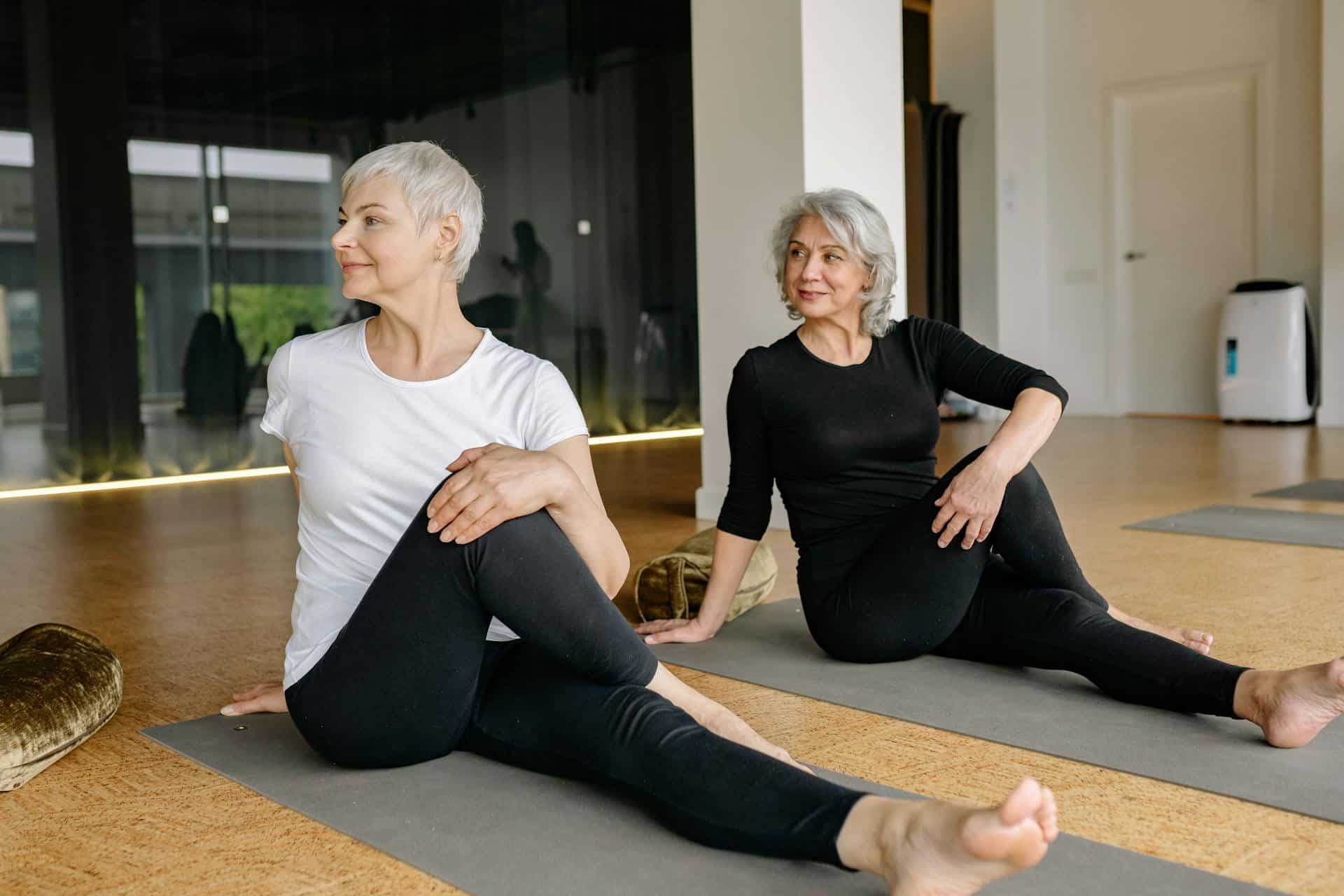
Certain movements, such as deep spinal twists or unsupported bending under load, may increase spinal strain if flexibility and strength are limited.
This does not mean spinal movement should be avoided entirely, but it should be controlled and well-supported.
Safer alternatives include:
- Neutral spine strength exercises
- Gentle rotation within a comfortable range
- Core exercises that emphasise control and stability
These options help support spinal health while reducing unnecessary strain.
Why Avoiding Exercise Completely Is Not the Answer
It’s important to note that avoiding exercise altogether often leads to greater risk over time. Reduced strength, balance, and mobility can increase the likelihood of falls and injury during everyday activities.
Rather than focusing on what to avoid, seniors benefit most from understanding how to adapt exercises safely. Many movements that appear risky can be modified to suit individual needs and abilities.
For a broader overview of safe exercise options, see our guide to the best exercises for seniors, which outlines how different types of activity support healthy ageing.
The Importance of Exercise Modification
Exercise modification allows seniors to gain the benefits of movement while reducing unnecessary risk. Modifications may include:
- Reducing the range of motion
- Slowing movement speed
- Using support or assistance
- Adjusting resistance or load
These changes help ensure exercise remains both effective and safe. Our supervised exercise physiology sessions build these modifications into every program.
When Extra Caution Is Needed
Some seniors may need additional care when exercising, particularly those with:
- Chronic joint pain
- Osteoporosis
- Balance difficulties
- A history of falls or injury
In these cases, personalised exercise selection and progression can help ensure safety and confidence. For those with balance difficulties or a history of falls, our falls and balance program for over 60s provides that structure.
Conclusion
Exercise plays a vital role in healthy ageing, but not all exercises are suitable for every senior. High-impact movements, uncontrolled exercises, and heavy lifting without proper progression can increase injury risk if not adapted appropriately.
The focus should be on choosing exercises that support strength, balance, mobility, and confidence while matching individual ability. With thoughtful selection and modification, most seniors can stay active safely and enjoy the long-term benefits of regular movement. The safest way to do that is to work with an accredited exercise physiologist who can tailor each movement to you.
FAQ
Are there exercises seniors should completely avoid?
Some high-impact or poorly controlled exercises may increase injury risk, but many movements can be modified rather than avoided altogether.
Why can certain exercises be risky for older adults?
Reduced balance, joint changes, and slower reaction times can increase injury risk if exercises aren’t appropriately selected or progressed.
Can exercises be modified to make them safer for seniors?
Yes, most exercises can be adapted by reducing load, range of motion, or speed to suit individual ability and comfort.