If you have osteoarthritis in your knees, you’ve probably already heard that exercise helps — and you’re ready for the practical part: which exercises actually make a difference. The short answer is a blend of strengthening, low-impact movement and mobility work, done consistently and built up gradually. Below are the types that help most, and how to approach them safely. (If you’re still wondering whether exercise is safe for arthritis at all, start with our guide on whether exercise is good for osteoarthritis.)
First, why exercise helps an arthritic knee
In a sentence: stronger muscles around the knee take load off the joint, movement keeps it mobile and less stiff, and staying active helps you keep doing everyday things without pain taking over. The goal isn’t to “fix” the joint — it’s to build the support around it so the knee works better and hurts less. The knee is a hinge that relies heavily on the muscles above and below it, so most of the useful work is about making those muscles stronger and better coordinated.
Strengthening exercises
Building the muscles that support and protect the knee is the single most valuable thing you can do. The knee doesn’t work in isolation — it depends on the strength of the thigh, hip and lower leg to stay stable and absorb load. The key muscle groups are the quadriceps (front of the thigh), the glutes and hips, the hamstrings, and the calves. Helpful types of movement include:
- Sit-to-stands — standing up from a chair and sitting back down slowly, one of the best all-round knee exercises and easy to build into your day.
- Step-ups — stepping up and down from a low step to build strength through a functional range you use on stairs.
- Bridges — to strengthen the glutes and hamstrings that support the knee from above and behind.
- Leg raises and gentle squats — to target the quads through a comfortable range, progressing depth as you get stronger.
- Calf raises — often overlooked, but the calf helps control the knee and ankle when you walk.
Start with what you can manage comfortably and add load or repetitions gradually. Strength gains — and pain relief — come from progressing over weeks, not from doing too much in one session.
Low-impact aerobic options
Aerobic exercise keeps you fit and helps manage the weight going through your knees, without the pounding of high-impact activity. Knee-friendly choices include:
- Walking — flat, comfortable routes to begin, building distance over time.
- Cycling — a stationary or road bike moves the knee through a smooth range with little impact.
- Water-based exercise — swimming or water walking lets you move and strengthen while the water supports your body weight, which many people find especially comfortable on a sore knee.
Range-of-motion and mobility
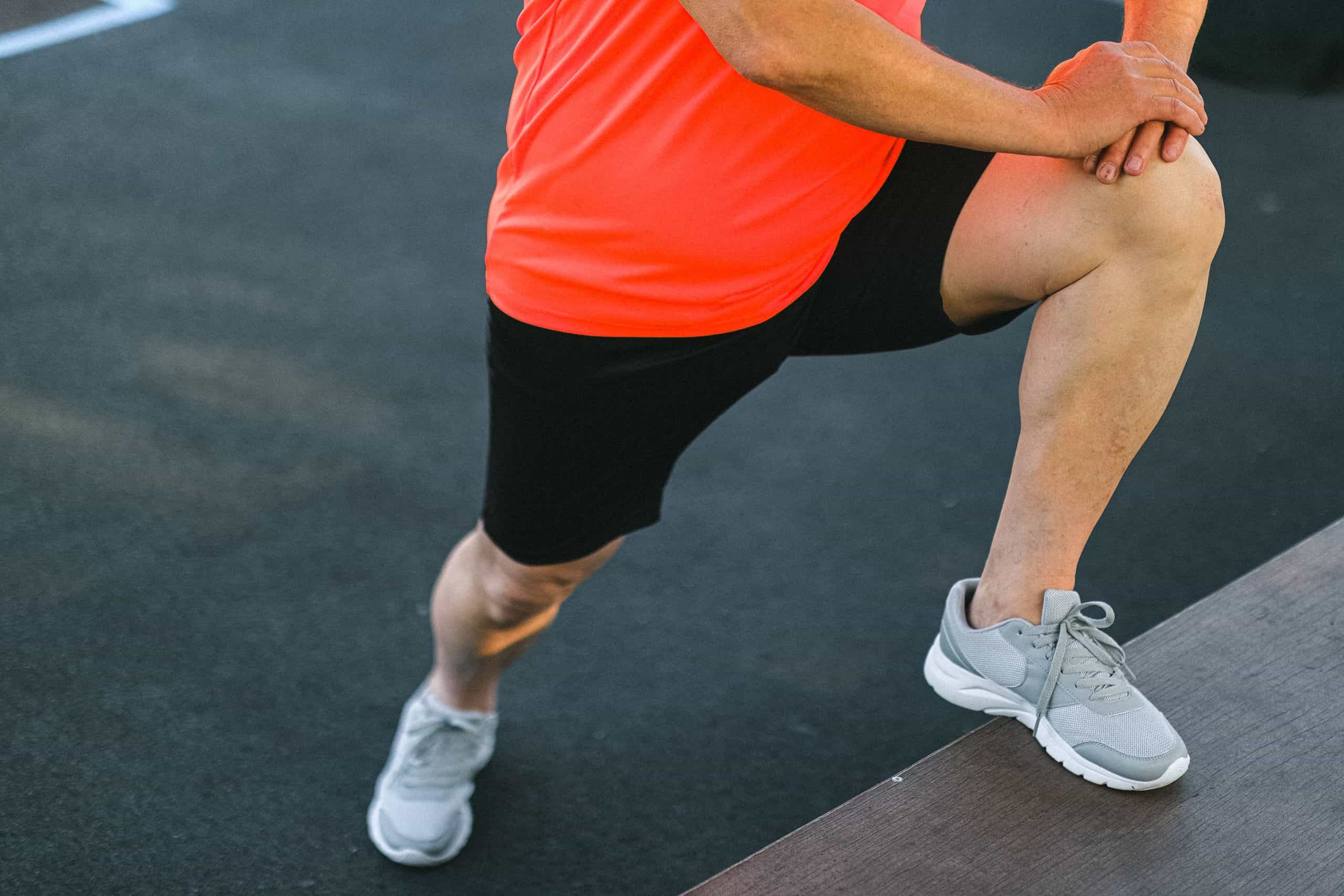
A stiff knee is often a painful knee. Gentle range-of-motion work — moving the knee through its full comfortable bend and straighten, plus light stretching of the muscles around it — helps keep the joint mobile and eases the stiffness that builds up with rest or overnight. A few minutes daily is often more useful than a long session now and then. Simple movements like seated knee bends, gentle heel slides and standing calf and thigh stretches are an easy place to start.
How often should you do these exercises?
For strengthening, most people do best with two to three sessions a week, leaving a day in between for the muscles to recover. Gentle mobility and walking can be done most days — in fact, little and often tends to work better than occasional big efforts. Consistency is what drives results: it usually takes a few weeks of regular work before you notice the knee feels stronger and less stiff, and a few months for the bigger gains. The trap most people fall into is doing too much in the first week, getting sore, and stopping — a steady, sustainable routine beats an intense one you can’t keep up.
What to be careful with
Exercising an arthritic knee well is mostly about how you progress:
- Ease into new exercises and increase gradually — sudden jumps in load are what tend to flare a knee.
- Some mild ache during or after is normal and usually settles within a day. Sharp pain, or pain that lingers and worsens, means adjust the exercise — not necessarily stop moving.
- Technique matters more than intensity, especially with squats and step-ups where knee alignment counts.
How an exercise physiologist tailors this to your knee
A generic list is a starting point, but your knee, your strength and your goals are specific to you. An accredited exercise physiologist assesses how your knee moves and where you’re weak or compensating, then builds a program that loads the joint safely and progresses as you get stronger. For the clinical side of arthritic-knee care — and how an ongoing program is structured — see our exercise for knee osteoarthritis page. As with any long-term condition, the people who get the best results are the ones who keep at it consistently, with a program that adapts over time.
Getting started in Melbourne
We work with people managing knee osteoarthritis at our Malvern and Blackburn clinics, with home visits and telehealth available across Melbourne. The first step is a proper assessment of your knee, then a plan built around it.
Frequently asked questions
What exercises should I avoid with knee arthritis? There’s no universal “banned” list — it depends on your knee. Deep, heavily loaded squats, running on hard surfaces or high-impact jumping can aggravate some knees, but even these vary person to person. The safer approach is adjusting how an exercise is done rather than avoiding movement altogether.
Is walking good for arthritic knees? For most people, yes — it’s low-impact and keeps the joint moving. If walking aggravates your knee, it usually means the distance, pace or surface needs adjusting, not that walking is off-limits.
Can strengthening reduce knee pain? Often, yes. Stronger muscles around the knee share the load the joint carries, and for many people that’s what brings the pain down. It takes consistency over several weeks to feel the benefit.
Should I use heat or ice with exercise? Many people find gentle warmth helpful before moving to loosen a stiff knee, and ice afterwards if it’s a little swollen. Neither replaces the exercise itself — they’re just comfort tools that can make it easier to keep going.
How long until my knee feels better? Many people notice less stiffness within a few weeks of consistent exercise, with strength and confidence continuing to build over months. An exercise physiologist can set realistic milestones for your knee