If you’ve been diagnosed with osteoporosis or low bone density in Melbourne, exercise is one of the most powerful things you can do to protect your bones. The key is the right kind of exercise, designed by someone who understands the condition.
At Summit Health Group’s Malvern and Blackburn clinics, our accredited exercise physiologists work with adults over 60 who are managing osteoporosis. This isn’t generic fitness. It’s a supervised program for osteoporosis built around your DEXA results, your medical history and your specific risk profile.
This article explains what exercise for osteoporosis actually involves, what to expect, and how our Melbourne clinics support clients through long-term bone health.
Why exercise is one of the best things you can do for osteoporosis
Osteoporosis means your bones have become less dense and more fragile, which increases fracture risk. The conventional approach focuses on medication and calcium and vitamin D intake. Those matter. But exercise is just as important, and in some cases more impactful.
Research consistently shows that structured exercise can:
- Slow or reverse age-related bone loss.
- Stimulate new bone formation, particularly at high-risk sites like the hips, spine and wrists.
- Reduce fracture risk by improving muscle strength and balance.
- Improve posture and reduce the risk of vertebral compression.
- Reduce falls risk, which is the single biggest factor in fracture incidence.
The catch is that the exercise has to be specific. Walking, swimming and light gym work are good for general health, but they don’t significantly increase bone density. The exercises that build bone are progressive resistance training, weight-bearing impact and balance work, designed at a level that suits your bone density and fracture history.
Why generic gym programs don’t work for osteoporosis
Most people with osteoporosis are told by their GP or specialist to stay active, but they’re not told exactly what to do. So many turn to a gym, a yoga class or a walking routine, none of which are likely to meaningfully change bone density.
Worse, some exercises are actually contraindicated for osteoporosis. Excessive spinal flexion, heavy twisting under load, and high-impact movements without clinical clearance can all increase fracture risk.
This is where an accredited exercise physiologist makes the difference. The program has to be specific to your bone density results, your fracture history, your medications and your current physical capacity. It has to be progressive, getting more challenging as you adapt. And it has to avoid the movements that could harm you.
What our Melbourne exercise physiology programs include
At our Malvern and Blackburn clinics, our osteoporosis programs combine four core elements.
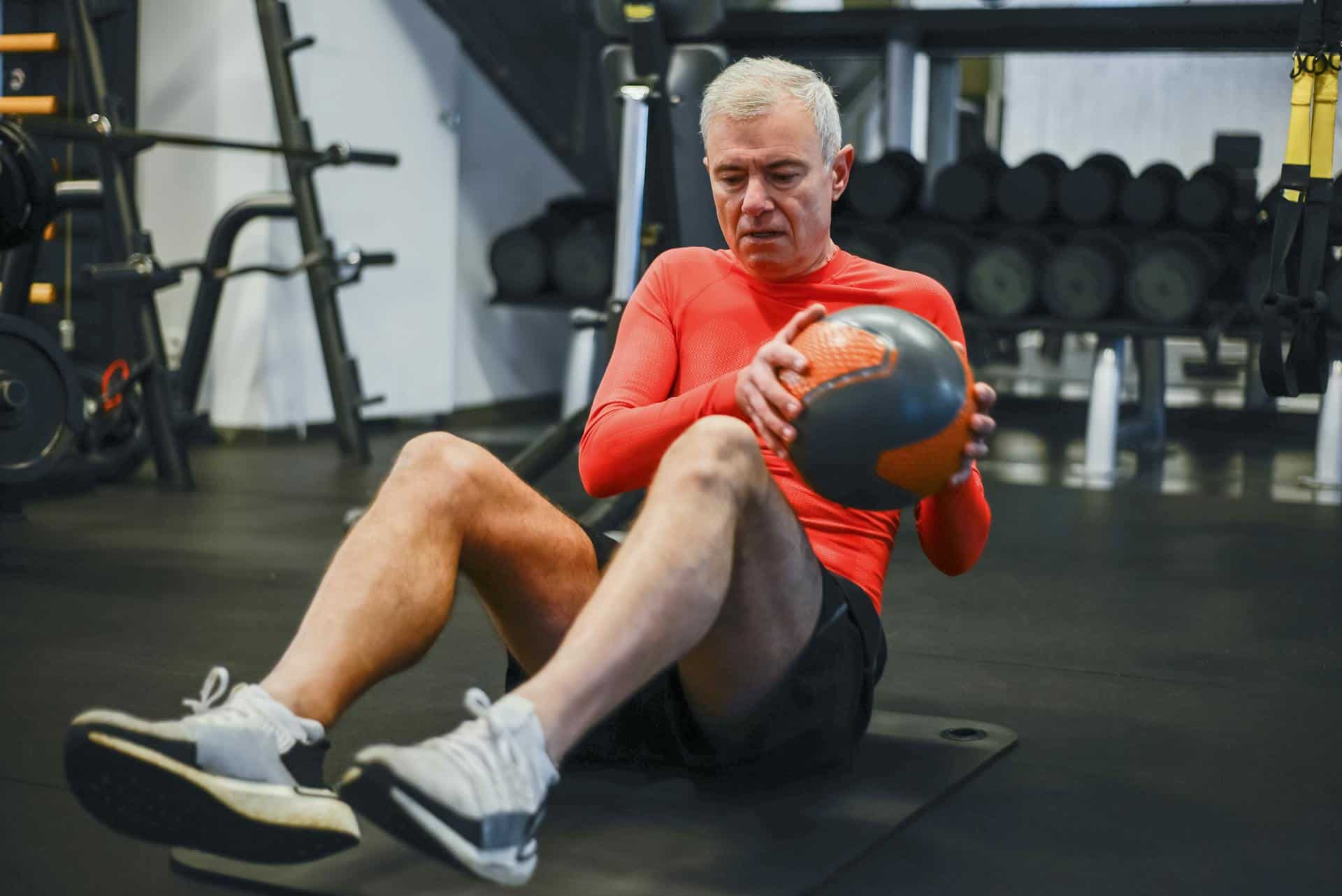
Progressive resistance training: moderately heavy weights using compound movements, targeting the hips, spine and other key fracture sites, and progressed gradually as your strength and confidence build.
Weight-bearing impact work: step-ups, heel drops and other controlled impact exercises that stimulate bone formation, adjusted to your specific risk profile.
Balance and falls prevention training: targeted exercises that address the strength, vestibular and proprioceptive systems involved in balance. The goal is reducing fall risk, which is the single biggest driver of fracture.
Postural and spinal strengthening: exercises that protect the spine from compression fractures by building strong upper back, deep core and spinal extensor muscles.
If you’ve been diagnosed with osteoporosis or low bone density in Melbourne, exercise is one of the most powerful things you can do to protect your bones. The key is the right kind of exercise, designed by someone who understands the condition.
At Summit Health Group’s Malvern and Blackburn clinics, our accredited exercise physiologists work with adults over 60 who are managing osteoporosis. This isn’t generic fitness. It’s a clinical program built around your DEXA results, your medical history and your specific risk profile.
This article explains what exercise for osteoporosis actually involves, what to expect, and how our Melbourne clinics support clients through long-term bone health.
Why exercise is one of the best things you can do for osteoporosis
Osteoporosis means your bones have become less dense and more fragile, which increases fracture risk. The conventional approach focuses on medication and calcium and vitamin D intake. Those matter. But exercise is just as important, and in some cases more impactful.
Research consistently shows that structured exercise can:
- Slow or reverse age-related bone loss.
- Stimulate new bone formation, particularly at high-risk sites like the hips, spine and wrists.
- Reduce fracture risk by improving muscle strength and balance.
- Improve posture and reduce the risk of vertebral compression.
- Reduce falls risk, which is the single biggest factor in fracture incidence.
The catch is that the exercise has to be specific. Walking, swimming and light gym work are good for general health, but they don’t significantly increase bone density. The exercises that build bone are progressive resistance training, weight-bearing impact and balance work, designed at a level that suits your bone density and fracture history. We cover exactly what exercises increase bone density in a dedicated guide.
Why generic gym programs don’t work for osteoporosis
Most people with osteoporosis are told by their GP or specialist to stay active, but they’re not told exactly what to do. So many turn to a gym, a yoga class or a walking routine, none of which are likely to meaningfully change bone density.
Worse, some exercises are actually contraindicated for osteoporosis. Excessive spinal flexion, heavy twisting under load, and high-impact movements without clinical clearance can all increase fracture risk.
This is where an accredited exercise physiologist makes the difference. The program has to be specific to your bone density results, your fracture history, your medications and your current physical capacity. It has to be progressive, getting more challenging as you adapt. And it has to avoid the movements that could harm you.
What our Melbourne exercise physiology programs include
At our Malvern and Blackburn clinics, our osteoporosis programs combine four core elements.
Progressive resistance training: moderately heavy weights using compound movements, targeting the hips, spine and other key fracture sites, and progressed gradually as your strength and confidence build.
Weight-bearing impact work: step-ups, heel drops and other controlled impact exercises that stimulate bone formation, adjusted to your specific risk profile.
Balance and falls prevention training: targeted exercises that address the strength, vestibular and proprioceptive systems involved in balance. The goal is reducing fall risk, which is the single biggest driver of fracture.
Postural and spinal strengthening: exercises that protect the spine from compression fractures by building strong upper back, deep core and spinal extensor muscles.
What to expect from your first appointment
Your first session at Summit Health Group is a clinical assessment, not a workout. Your exercise physiologist will:
- Review your DEXA scan results and any relevant medical history.
- Talk through any fractures you’ve had and any medications you’re taking.
- Assess your strength, balance, posture and movement capacity.
- Discuss your goals, and what you’d like to be doing in 6 months, 12 months and beyond.
- Design a personalised program based on what you can do now and where you want to get to.
Sessions then run weekly. Most clients attend one session a week with the same exercise physiologist, which is what builds the long-term relationship and tracking that produces results.
Why ongoing weekly attendance produces better results
Bone density doesn’t respond to a quick burst of sessions. The biological process of bone remodelling takes months. To produce measurable improvement, the exercise stimulus has to be consistent and progressive, week after week, over six to twelve months.
That’s why Summit Health Group’s model is built around ongoing weekly attendance rather than short blocks of sessions. Our clients don’t graduate out of their programs. They keep attending because the exercise itself is producing the bone density, strength and functional outcomes they came for.
Our two Melbourne clinics
We work with clients managing osteoporosis at two locations.
Malvern clinic: 73–75 Station Street, Malvern VIC 3144. Serving Malvern, Armadale, Glen Iris, Caulfield, Toorak and South Yarra. Phone (03) 9576 3216.
Blackburn clinic: 7/28–30 Blackburn Road, Blackburn VIC 3130. Serving Blackburn, Box Hill, Forest Hill, Nunawading, Mitcham, Burwood and Ringwood. Phone (03) 8625 0514.
Both clinics offer extended hours with early morning starts. Home visits and telehealth are also available where appropriate.
Frequently asked questions
Can exercise reverse osteoporosis?
Exercise can’t fully reverse osteoporosis, but it can significantly slow bone loss, stimulate new bone formation and reduce fracture risk. Combined with appropriate nutrition and any prescribed medications, structured exercise is one of the most effective long-term interventions available.
Is it safe to exercise with osteoporosis?
Yes, with a program designed by an accredited exercise physiologist who understands the condition. The key is matching exercise type, intensity and progression to your individual bone density results, fracture history and physical capacity. Generic gym programs aren’t appropriate.
Do I need a referral to see an exercise physiologist for osteoporosis?
No referral is required. You can contact Summit Health Group directly at our Malvern or Blackburn clinic. If you have a recent DEXA scan, bring it to your first appointment, as it helps us design the most effective program.
How long before I see results?
Most clients notice improvements in strength, balance and confidence within four to six weeks. Measurable changes in bone density typically take six to twelve months of consistent weekly exercise. This is why we design programs for ongoing weekly attendance rather than short courses.
Does Medicare cover exercise physiology for osteoporosis?
Summit Health Group is a private-pay clinic and we don’t bulk bill. Call us for current session pricing.
Osteoporosis isn’t something you can fix with a quick burst of sessions. But with consistent, well-designed exercise over time, you can significantly improve your bone health, reduce your fracture risk and stay independent for longer. It is part of our broader approach to Melbourne exercise physiology for healthy ageing.
Speak to an exercise physiologist in Melbourne who specialises in bone health.