Quick Summary
- Progressive resistance training and weight-bearing exercise are the most effective types of exercise for improving bone density in older adults
- Balance training is equally important, as it significantly reduces the risk of falls and fractures
- Not all exercises are safe for people with osteoporosis, and some movements should be avoided without professional guidance
- According to the Better Health Channel, around half of all women and one-third of men over 60 in Australia have osteoporosis
- An accredited exercise physiologist can design a safe, targeted program for older adults in Malvern and Blackburn
Exercise is one of the most powerful tools available for managing osteoporosis, but not all forms of physical activity produce the same results. According to the Better Health Channel, around half of all women and one third of men over 60 in Australia have osteoporosis, and exercising regularly can reduce the rate of bone loss and improve bone health. For older adults in Malvern, Blackburn and the surrounding Melbourne suburbs, understanding which exercises actually work and which ones to approach with care is the first step toward building a safe and effective program.
Why Exercise Matters for Bone Health
Bone is a living tissue that responds to mechanical stress. When muscles apply load to the skeleton during exercise, they send a signal to bone-forming cells to strengthen and maintain the structure. This process is known as bone remodelling. Without sufficient mechanical stimulus, bone density declines more rapidly with age.
The key principle is that not all exercise creates enough load to stimulate bone remodelling. Low-intensity activities like gentle stretching or leisurely walking, while beneficial for general health, do not produce the forces needed to meaningfully improve bone density in people who already have osteoporosis or osteopenia. The exercises that work best are those that challenge the skeleton with progressive load or controlled impact.
The Three Types of Exercise That Help Osteoporosis Most
Progressive Resistance Training
Progressive resistance training is considered the most effective form of exercise for improving bone density in older adults with osteoporosis. Our strength training for older adults is built around this principle. It works by applying increasing loads to the muscles and skeleton over time, stimulating bone-forming cells in the hips, spine and wrists, which are the most commonly affected areas.
Resistance training for osteoporosis typically includes exercises using free weights, resistance bands, weight machines or bodyweight. The key is progressive overload, meaning the difficulty is gradually increased as strength improves. Research consistently shows that moderate to high intensity resistance training produces the greatest improvements in bone mineral density, particularly when combined with weight-bearing impact activities.
Suitable resistance exercises for older adults with osteoporosis include:
Supported squats to strengthen the hips, thighs and core Shoulder and upper back exercises using resistance bands Hip hinge movements to strengthen the posterior chain Step exercises to load the hips and spine safely Seated or standing pressing movements to strengthen the upper body
All resistance exercises should be supervised when starting out, particularly for people who have not exercised recently or who have a history of fractures.
Weight-Bearing Exercise
Weight-bearing exercise refers to any activity performed on your feet where the skeleton bears the body’s weight against gravity. This type of exercise stimulates bone maintenance in the lower body and spine and is an essential complement to resistance training.
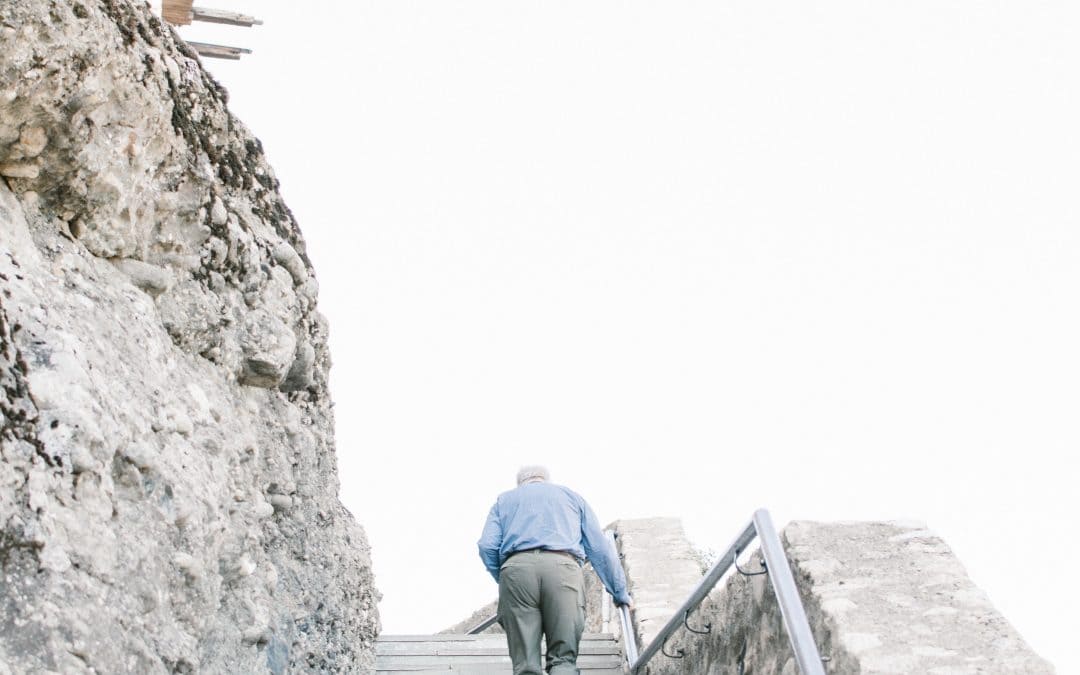
Effective weight-bearing exercises for older adults with osteoporosis include brisk walking, stair climbing, heel drops and low-impact step exercises. Dancing is also an excellent option as it combines weight-bearing activity with balance and coordination challenges.
It is worth noting that swimming and water-based exercise, while excellent for cardiovascular fitness and joint health, are not weight-bearing and do not provide the bone-loading stimulus needed to improve bone density. They remain a valuable option for older adults with severe osteoporosis or other conditions that limit land-based activity, but should not be relied upon as the primary bone health strategy.
Balance and Stability Training
Balance training is the third essential component of an osteoporosis exercise program. While it does not directly improve bone density, it dramatically reduces the risk of falls, which are the primary cause of fractures in people with osteoporosis. Our balance training for older adults targets exactly this.
As we age, balance and reaction time naturally change. Targeted balance exercises help maintain stability and confidence during everyday activities such as walking on uneven surfaces, turning quickly and navigating stairs. Regular balance training has been shown to significantly reduce falls risk in older adults.
Balance exercises suitable for older adults include:
Supported single-leg stands progressed over time Heel to toe walking along a line Controlled stepping and turning drills Sit to stand practice to improve lower limb stability Tai chi, which combines balance, coordination and gentle movement
Exercises to Avoid With Osteoporosis
Certain exercises carry a higher risk of fracture for people with osteoporosis and should generally be avoided unless specifically cleared by a health professional. These include:
Loaded spinal flexion exercises such as traditional sit-ups or toe touches, which place compressive stress on the vertebrae Rapid or forceful twisting movements such as a golf swing performed at full speed without conditioning High-impact activities such as jumping or running without a progressive build-up and professional supervision Deep forward bending movements that round the lower back under load
This does not mean these movements are never appropriate, but they require careful assessment and gradual progression under the guidance of an accredited exercise physiologist who understands the individual’s bone density level and fracture risk.
How Much Exercise Do Older Adults With Osteoporosis Need
Current guidelines suggest that older adults with osteoporosis benefit most from a structured program that includes resistance training two to three times per week, weight-bearing impact exercise at least three days per week, and balance training a minimum of three sessions per week. In practice, many of these components can be combined within the same session to keep the time commitment manageable.
The most important factor is consistency. A moderate program performed regularly over 6 to 12 months produces meaningful improvements in bone density, muscle strength and balance. Progress is gradual but cumulative, and the protective effects build over time.
Why Professional Supervision Makes a Difference
For older adults in Malvern and Blackburn, working with an accredited exercise physiologist rather than following a general exercise program makes a significant difference for two reasons.
First, safety. Not all exercises are appropriate for every individual with osteoporosis. Bone density varies, fracture history varies, and other health conditions affect what is safe and effective. A qualified exercise physiologist assesses all of these factors before designing a program.
Second, effectiveness. The exercises that produce the best bone health outcomes, particularly progressive resistance training at appropriate intensities, require correct technique and progressive overload to work. Without guidance, many older adults either avoid the intensity needed to stimulate bone adaptation or perform movements incorrectly and risk injury.
Summit Health Group’s Malvern and Blackburn clinics provide an accredited osteoporosis strength training program specifically designed for older adults managing osteoporosis. Each program begins with a clinical assessment reviewing your bone density results, medical history, movement capacity and falls risk. From there your exercise physiologist builds a targeted, progressive program that combines resistance training, weight-bearing activity and balance work in a safe, supervised environment.
For more information about our approach visit our osteoporosis exercise and bone health service page.
Getting Started Safely in Malvern and Blackburn
Many older adults with osteoporosis are understandably cautious about starting an exercise program, particularly if they have experienced a fracture or have concerns about injuring themselves. This caution is valid but should not prevent you from exercising. Research consistently shows that supervised exercise programs for osteoporosis are safe and that the risks of inactivity, including falls, fractures and loss of independence, are far greater than the risks of carefully supervised exercise.
The Malvern clinic on Station Street is easily accessible for residents across Malvern, Armadale, Caulfield, Glen Iris, Toorak and South Yarra. The Blackburn clinic serves residents across Blackburn, Box Hill, Forest Hill, Nunawading, Mitcham and Ringwood. Both clinics offer extended hours with early morning start times to fit around busy schedules.
If you have been diagnosed with osteoporosis or osteopenia and are unsure where to start, booking an initial assessment is the best first step. Your exercise physiologist will take the guesswork out of what is safe, what is effective and how to progress at a pace that is right for you. Our tailored exercise programs led by an AEP are built around exactly that.
Combining your exercise program with adequate calcium intake is equally important. See our guide on calcium and osteoporosis bone health.
If you are unsure of your current bone density level, read our guide on what a DEXA scan is and what your results mean before booking your first assessment.
Frequently Asked Questions
What is the best exercise for osteoporosis?
Progressive resistance training combined with weight-bearing exercise produces the strongest evidence for improving bone density in people with osteoporosis. Balance training is also essential to reduce falls risk. A program that includes all three types of exercise delivers the best overall outcomes for bone health and fracture prevention.
Is walking enough exercise for osteoporosis?
Walking is beneficial for general health and helps maintain bone mass in the lower body, but it is generally not enough on its own to meaningfully improve bone density in people who already have osteoporosis. Pairing walking with regular resistance training produces significantly better bone health outcomes.
Is exercise safe for people with osteoporosis?
Yes, when supervised by an accredited exercise physiologist. Certain movements need to be modified or avoided based on individual bone density and fracture risk, but most people with osteoporosis can safely engage in progressive resistance training, weight-bearing activity and balance work with appropriate guidance.
How long before exercise improves bone density?
Strength and balance improvements are often noticeable within a few weeks of starting a structured program. Measurable improvements in bone density typically occur over 6 to 12 months of consistent exercise. An accredited exercise physiologist can monitor your progress and adjust your program over time.
Can I exercise if I have already had a fracture from osteoporosis?
Yes. Exercise is still recommended after a fracture, though the program will be adapted to account for the healing process and any limitations in movement. Your exercise physiologist will work with your medical team to ensure the program is safe and appropriate for your recovery stage.